Services / 3 min readThe Union in Frame journal
Dark rooms, flash and the dance floor: how evening photographs work
Words by Union in Frame
Most receptions are dark by the time the dancing starts. That is not a problem for an experienced photographer, but it does change how the pictures are made. Here is what the flash is doing, why coloured light matters, and how to plan the evening.
What on-camera flash actually does
A flash on the camera gives a short, clean burst of light that freezes movement and keeps faces natural. Most photographers angle it at the ceiling or a wall rather than straight at you, so the light arrives softer and from above, closer to how a room normally looks.
Pointed directly, flash flattens faces and leaves a hard shadow behind you, which is why phone snapshots from the same evening look so different. A dark or very high ceiling takes that bounce away, which is where off-camera lights come in.
Why off-camera lights come out for the party
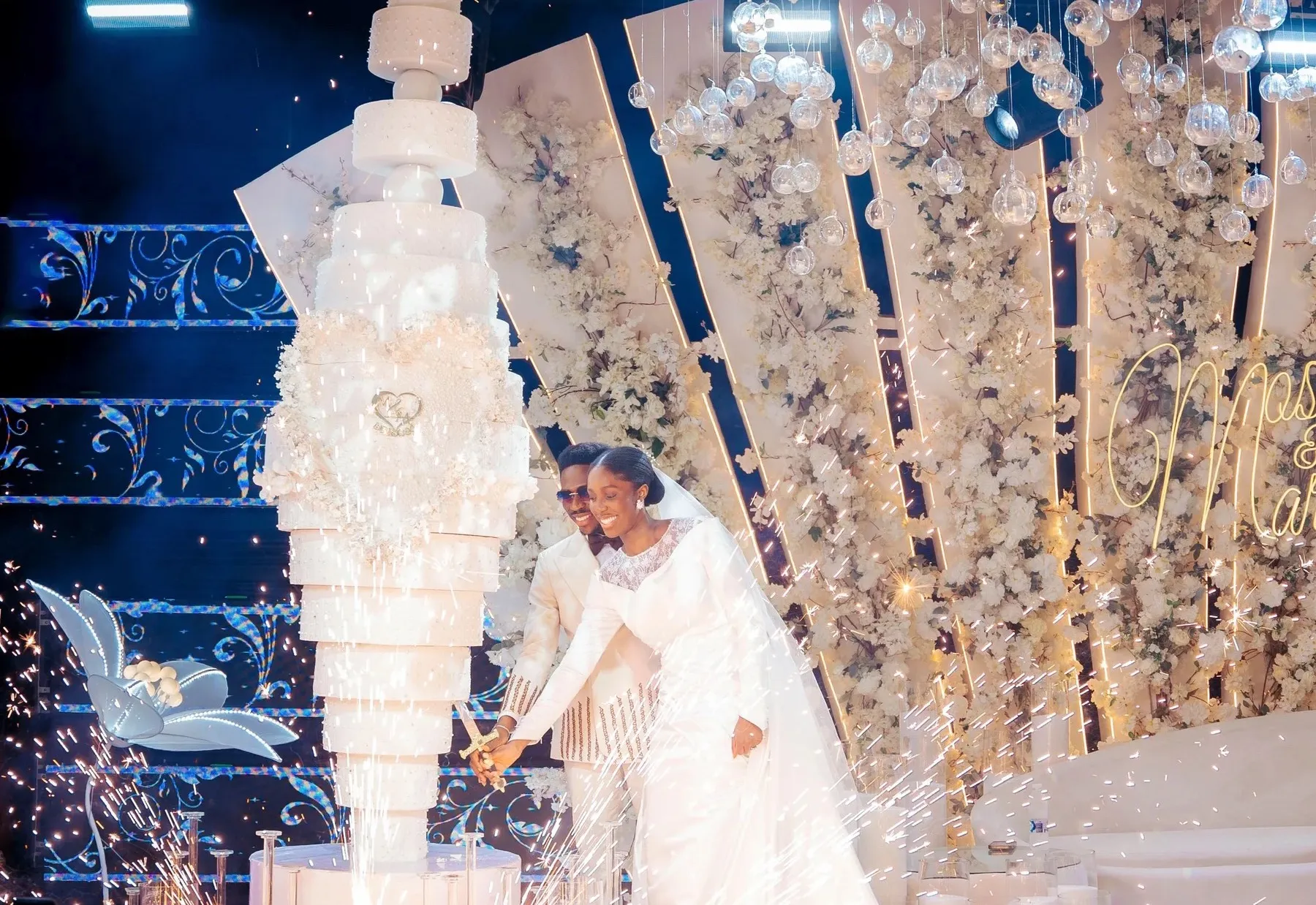
Off-camera lights are small flashes on stands around the dance floor, fired by the camera. One behind the dancers adds a rim of light and picks out confetti, haze and movement. Another to the side gives faces shape, so the pictures have depth rather than looking flat.
This is the set-up behind many dance floor photographs you will have seen in galleries. It needs a little floor space and a few minutes to arrange, usually while the first dance is being announced. Tell your photographer if the floor is shared with a band.
Coloured lighting, uplighters and skin tones
DJ lighting and uplighters are designed to fill a room with saturated colour, which looks lovely in the room and strange on skin. Deep red or blue light removes the colour information a camera needs for faces, and it cannot be fully corrected afterwards. Flash largely overrides it, which is why dance floor photographs often look more natural than the room did.
If the colour matters to you, ask the DJ to keep the lights moving rather than parked on one hue, and to avoid green. Warm white or amber uplighters are kindest to everyone.
Candles, fairy lights and the quiet moments
Candles and fairy lights photograph well as a glow, but on their own they rarely light a face. They read as atmosphere, while the people in front of them sink into shadow. Most photographers mix a little flash with the room light so the candles stay golden while the faces come through.
For the speeches and cake cutting, a single soft light is usually enough. If you want some photographs with no flash at all, say so. Modern cameras cope well in low light, and the softness suits the mood.
How long to keep the photographer, and what to ask for
Plan coverage to finish around forty-five minutes after the first dance. That covers the first dance, a parents' dance if there is one, and the floor filling, which is where the best party photographs usually sit. Beyond that, the pictures become more of the same, so weigh an extra hour against what it would add.
Ask the venue for a dance floor the photographer can move around, and whether fixed lighting can be dimmed. Ask the DJ for white or warm light during the first dance, and no lasers until the cameras have finished: a direct hit can damage a sensor.
Want advice for your own date and venue? Tell us what you're planning